
 EN
EN
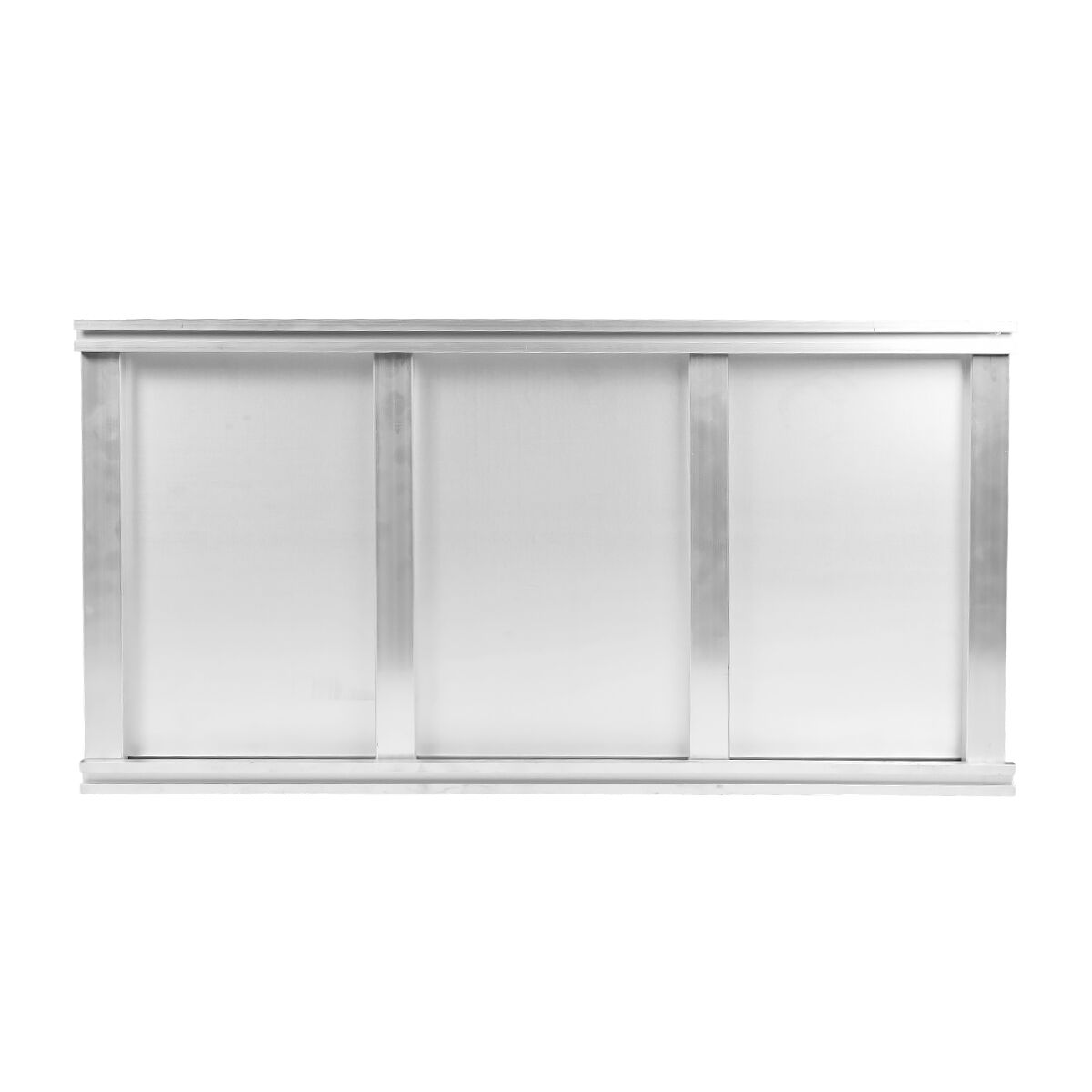
Selecting the right cable ladder manufacturer for industrial supply is one of those decisions that carries long-term consequences for your facility's safety, maintenance costs, and operational reliability. Unlike commodity purchases, a cable ladder system is a structural component of your electrical infrastructure, and the manufacturer behind it determines everything from material consistency to technical support. Understanding how to evaluate and compare manufacturers before committing to a supply relationship is essential for procurement managers, electrical engineers, and facility planners working in demanding industrial environments.
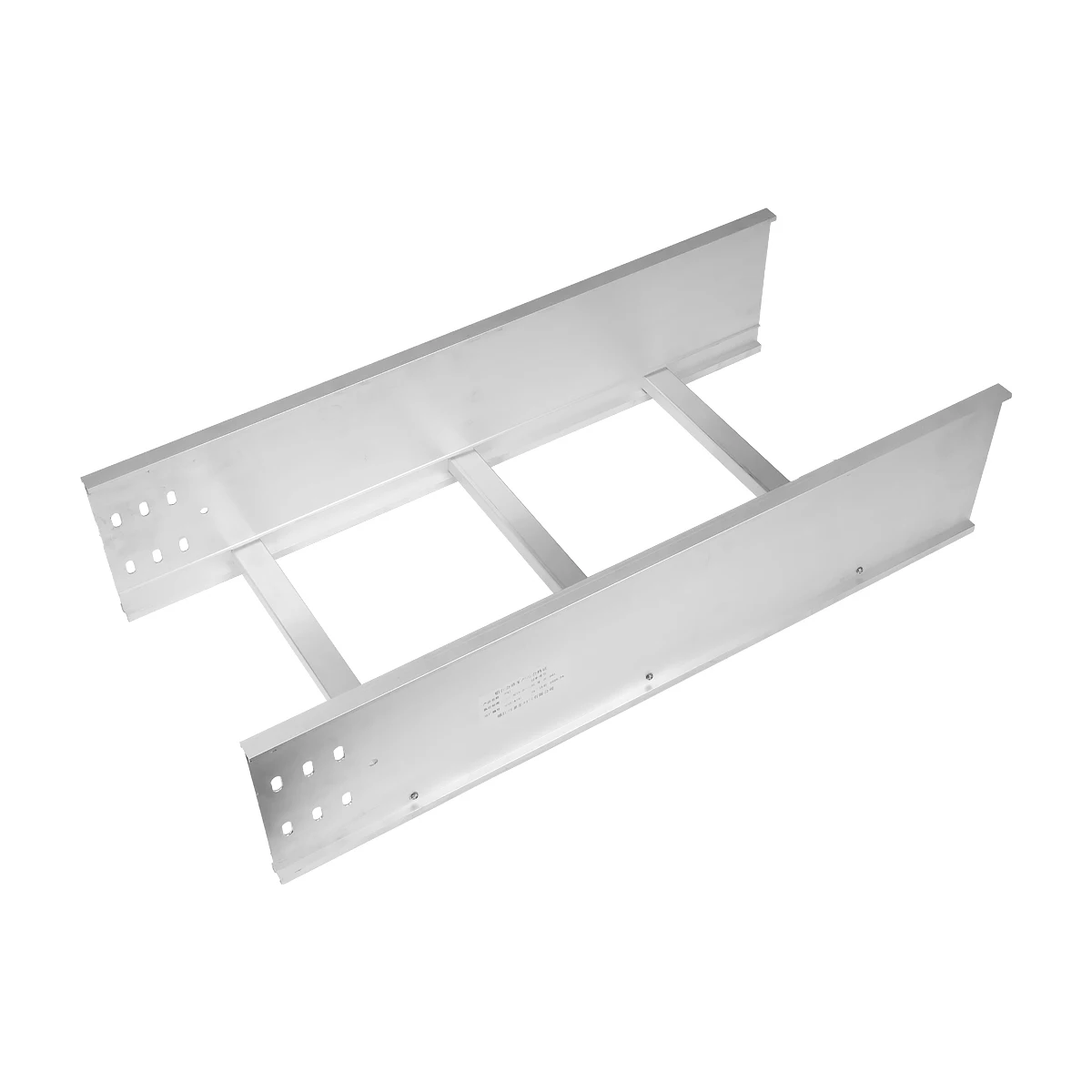
The cable ladder market includes a wide range of suppliers, from large-scale industrial manufacturers to smaller regional fabricators, and not all of them deliver the same level of quality, compliance, or service consistency. When your project demands reliable cable management across heavy-duty industrial settings — such as petrochemical plants, data centers, power generation facilities, or manufacturing floors — the comparison process must go beyond price. This guide walks through the key dimensions you should evaluate when comparing cable ladder manufacturers for industrial supply, helping you make a well-informed, risk-managed sourcing decision.
Understanding What Differentiates Cable Ladder Manufacturers
Manufacturing Capability and Production Scale
One of the first factors to assess when comparing cable ladder manufacturers is their actual production capability. A manufacturer with modern roll-forming equipment, automated welding lines, and in-house surface treatment facilities can deliver more consistent product quality than one relying on manual fabrication or outsourced processing. Production scale also matters when you are sourcing for large industrial projects that require high volumes within tight delivery windows.
Ask potential suppliers about their annual production capacity, lead times for standard and custom cable ladder configurations, and whether they maintain finished goods inventory or operate purely on a make-to-order basis. Manufacturers with dedicated production lines for cable ladder systems tend to have tighter dimensional tolerances and more repeatable quality outcomes than general metalwork fabricators who treat cable ladder as a secondary product line.
It is also worth understanding whether the manufacturer controls the full production chain. Vertical integration — from raw material sourcing through to surface finishing and quality inspection — reduces the risk of inconsistencies introduced by subcontractors. For industrial supply relationships, this level of control is a meaningful differentiator.
Material Specifications and Surface Treatment Options
The cable ladder you specify must match the environmental conditions of your installation site. Manufacturers who offer a comprehensive range of materials — including hot-dip galvanized steel, pre-galvanized steel, stainless steel grades 304 and 316, and aluminum alloys — give you the flexibility to match the right material to the right application. A manufacturer limited to a single material type may not be the right long-term partner for a facility with diverse installation environments.
Surface treatment quality is equally important. Hot-dip galvanizing, for example, must meet specific coating thickness standards to provide adequate corrosion protection in outdoor or chemically aggressive environments. Ask manufacturers to provide documentation of their surface treatment processes, including coating thickness test results and compliance with relevant standards such as ISO 1461 for hot-dip galvanizing. A manufacturer who cannot provide this documentation is a risk in any serious industrial supply context.
Stainless steel cable ladder is increasingly specified for data centers, food processing facilities, and offshore installations where corrosion resistance and hygiene are critical. Manufacturers who specialize in stainless steel fabrication will have the appropriate tooling, welding procedures, and passivation processes to deliver cable ladder that meets these demanding requirements without compromising the material's corrosion-resistant properties.
Evaluating Compliance, Certification, and Standards Alignment
International and Regional Standards Compliance
Industrial procurement teams operating across multiple regions need cable ladder manufacturers who understand and comply with the relevant international and regional standards. Key standards frameworks include IEC 61537 for cable management systems, NEMA VE 1 for metallic cable tray systems in North America, and EN 61537 for European markets. A manufacturer who can demonstrate compliance with these standards provides a baseline assurance of structural performance, load-bearing capacity, and dimensional consistency.
When comparing manufacturers, request copies of their test reports and certification documentation. Third-party testing by accredited laboratories carries more weight than self-declared compliance. Manufacturers who invest in independent certification are signaling a commitment to quality that goes beyond marketing claims. This is particularly important when your cable ladder installation must pass inspection by regulatory authorities or third-party project auditors.
Beyond structural standards, consider whether the manufacturer's cable ladder products are compatible with the grounding and bonding requirements of your electrical installation standards. Continuity of the cable management system's earth path is a safety-critical requirement in many industrial environments, and not all cable ladder designs address this with equal rigor.
Quality Management Systems and Traceability
A manufacturer operating under a certified quality management system — such as ISO 9001 — has demonstrated that their production processes, inspection procedures, and corrective action mechanisms meet an internationally recognized standard. For industrial supply relationships, this certification is a meaningful indicator of process discipline and continuous improvement culture. It does not guarantee perfect products, but it does mean that when problems occur, there is a structured system for identifying root causes and preventing recurrence.
Material traceability is another quality dimension worth examining. For critical installations, being able to trace a cable ladder component back to its raw material batch, production date, and inspection records can be important for maintenance planning and incident investigation. Manufacturers with robust traceability systems are better partners for long-term industrial supply relationships where accountability matters.
Request sample quality documentation from prospective manufacturers, including material test certificates, dimensional inspection reports, and surface treatment records. How a manufacturer responds to this request tells you a great deal about their quality culture. Suppliers who provide this documentation promptly and completely are demonstrating the kind of transparency that supports confident procurement decisions.
Assessing Product Range, Customization, and Technical Support
Breadth of the Cable Ladder Product Range
Industrial projects rarely require a single standard cable ladder configuration. A comprehensive manufacturer should offer a full range of cable ladder widths, depths, and rung spacings, along with the full complement of fittings — horizontal bends, vertical bends, tees, crosses, reducers, and end caps — that allow a complete cable management system to be assembled without resorting to field fabrication. Gaps in a manufacturer's fitting range create installation problems and increase labor costs on site.
Evaluate whether the manufacturer's cable ladder range includes both light-duty and heavy-duty load classes, as industrial facilities often have diverse cable management requirements across different areas. A manufacturer who can supply the full spectrum from light instrumentation cable trays to heavy-duty power cable ladders simplifies your supply chain and reduces the number of vendor relationships you need to manage.
Accessories such as cable ladder support brackets, splice plates, bonding straps, and cover systems should also be part of the manufacturer's offering. A complete system from a single source is easier to specify, install, and maintain than a hybrid assembly sourced from multiple suppliers with potentially incompatible dimensional standards.
Custom Fabrication and Engineering Support
Many industrial installations require cable ladder configurations that fall outside standard catalog dimensions. Manufacturers who offer custom fabrication services — including non-standard widths, special rung profiles, or project-specific surface treatments — provide significantly more value to complex industrial projects than those limited to standard catalog items. Confirm whether custom orders are handled in-house or subcontracted, as this affects both lead time and quality consistency.
Technical engineering support is a differentiator that is easy to overlook during the initial comparison process but becomes critical during project execution. Manufacturers with experienced application engineers who can assist with load calculations, span tables, and installation guidance reduce the burden on your own engineering team and help avoid costly specification errors. Ask prospective manufacturers whether they provide technical data sheets, load span tables, and installation guides as standard documentation.
Some cable ladder manufacturers also offer BIM (Building Information Modeling) objects or CAD drawing libraries that integrate with common design software platforms. For large industrial projects where detailed 3D modeling is part of the design workflow, this capability can meaningfully accelerate the design process and reduce coordination errors between disciplines.
Comparing Commercial Terms, Supply Chain Reliability, and After-Sales Service
Pricing Structure and Total Cost of Ownership
Price is an obvious comparison point, but evaluating cable ladder manufacturers purely on unit price is a common procurement mistake. The total cost of ownership includes not just the purchase price but also the costs associated with quality failures, delivery delays, installation rework, and warranty claims. A manufacturer offering slightly higher unit prices but delivering consistent quality, on-time shipments, and responsive technical support often represents better value than a lower-cost supplier with unpredictable performance.
When comparing pricing, ensure you are comparing equivalent specifications. Cable ladder products that appear similar on a catalog page can differ significantly in steel gauge, coating weight, and dimensional accuracy. Request detailed material specifications alongside pricing to ensure you are making a like-for-like comparison. Manufacturers who are transparent about their material specifications are easier to evaluate fairly.
Consider also the commercial terms offered by each manufacturer — minimum order quantities, payment terms, volume discount structures, and consignment or stocking arrangements. For ongoing industrial supply relationships, favorable commercial terms can have a meaningful impact on your working capital and supply chain flexibility.
Delivery Reliability and Supply Chain Resilience
For industrial projects operating on tight construction schedules, delivery reliability is a non-negotiable requirement. Late delivery of cable ladder can delay electrical installation work, which in turn delays commissioning and project handover. When evaluating manufacturers, ask for references from existing customers who can speak to the supplier's track record for on-time delivery, particularly during periods of high demand or supply chain disruption.
Assess the manufacturer's supply chain resilience by understanding their raw material sourcing strategy. Manufacturers who maintain strategic raw material inventory or have diversified steel supply relationships are better positioned to maintain delivery commitments during periods of market volatility. This is particularly relevant for stainless steel cable ladder, where raw material availability can be more constrained than for standard carbon steel products.
Logistics capability is also worth examining. Manufacturers who have established relationships with freight forwarders, understand export documentation requirements, and have experience shipping to your target region will encounter fewer delays and complications than those with limited international shipping experience. For global industrial supply chains, this operational competence is a genuine differentiator.
FAQ
What is the most important factor when comparing cable ladder manufacturers for industrial supply?
There is no single most important factor — the right weighting depends on your project requirements. However, for most industrial supply decisions, the combination of material quality consistency, standards compliance documentation, and delivery reliability tends to have the greatest impact on project outcomes. Price matters, but it should be evaluated in the context of total cost of ownership rather than unit cost alone. A cable ladder manufacturer who delivers consistent quality on time, every time, is worth a premium over one whose lower prices come with unpredictable performance.
How do I verify that a cable ladder manufacturer's products meet international standards?
Request copies of third-party test reports from accredited testing laboratories, along with the manufacturer's ISO 9001 certification and any product-specific certifications relevant to your market. For structural performance, look for test reports referencing IEC 61537 or equivalent regional standards. For surface treatment, request coating thickness test results and compliance documentation. Be cautious of manufacturers who can only provide self-declared compliance without supporting third-party evidence, as this represents a meaningful quality risk in industrial applications.
Should I work with a single cable ladder manufacturer or multiple suppliers?
For most industrial supply relationships, working with a primary cable ladder manufacturer who can cover the majority of your requirements offers significant advantages in terms of dimensional compatibility, simplified procurement, and stronger commercial relationships. However, maintaining a qualified secondary supplier provides supply chain resilience in case of disruption. The key is to ensure that any secondary supplier's cable ladder products are dimensionally compatible with your primary supplier's fittings and accessories, so that mixed-source installations remain practical and safe.
What questions should I ask a cable ladder manufacturer during the evaluation process?
Key questions include: What materials and surface treatments do you offer, and what documentation supports your coating quality claims? Which international standards do your cable ladder products comply with, and can you provide third-party test reports? What is your standard lead time for both catalog and custom cable ladder orders? Do you offer engineering support for load calculations and installation guidance? Can you provide references from existing industrial customers who can speak to your delivery reliability and quality consistency? The answers to these questions, and the manner in which they are provided, will tell you a great deal about whether a manufacturer is the right long-term partner for your industrial supply needs.
Table of Contents
- Understanding What Differentiates Cable Ladder Manufacturers
- Evaluating Compliance, Certification, and Standards Alignment
- Assessing Product Range, Customization, and Technical Support
- Comparing Commercial Terms, Supply Chain Reliability, and After-Sales Service
-
FAQ
- What is the most important factor when comparing cable ladder manufacturers for industrial supply?
- How do I verify that a cable ladder manufacturer's products meet international standards?
- Should I work with a single cable ladder manufacturer or multiple suppliers?
- What questions should I ask a cable ladder manufacturer during the evaluation process?